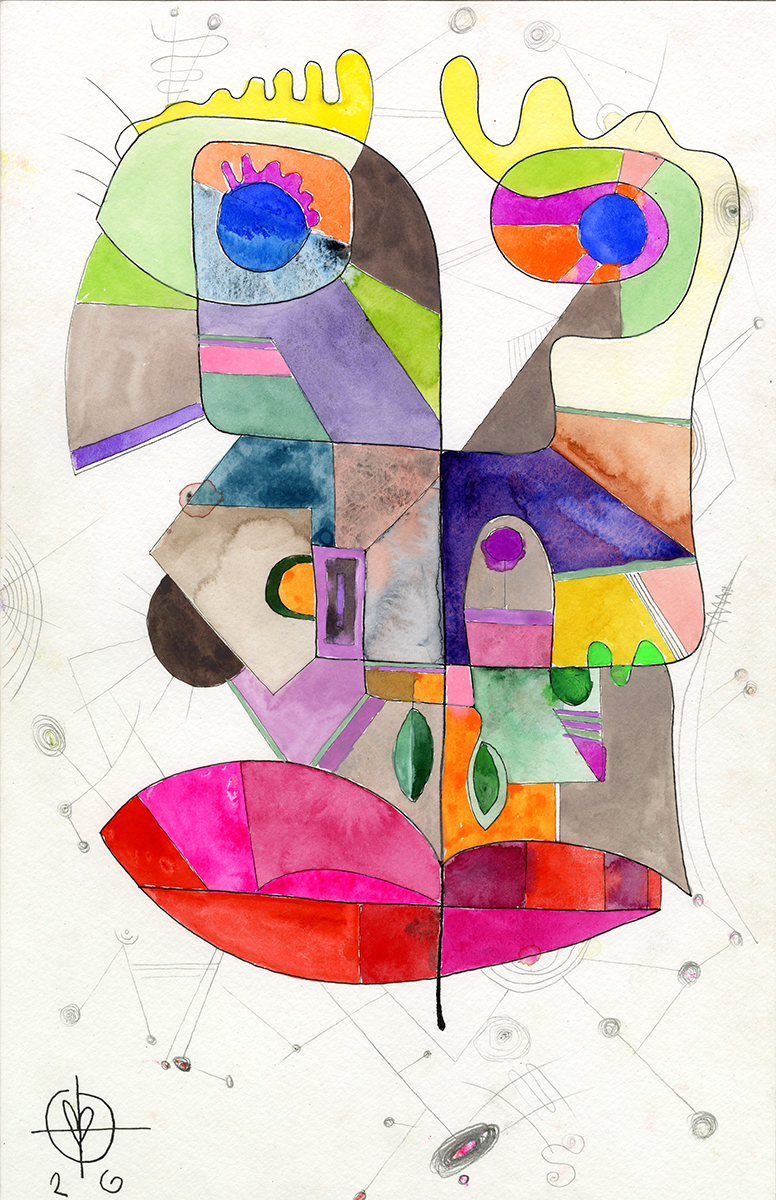

The Mind is Not the Compass | Flow Line Faces 07 03 26
These Flow Line Faces are presented framed on the gallery wall, each drawn through Gregory Beylerian’s practice of active meditation, spontaneous ink strokes set down without premeditation. Displayed together, the works form a gathering of presence, each face surfaced from a state of unguarded attention. Their stillness extends into the gallery itself, offering viewers a shared space of contemplation and bridged connection.

The Mind Is Not the Compass
“The mind can interpret the path, but only the heart can reveal the direction.”
One of the greatest misunderstandings of human life is the belief that the mind should lead. We are taught to trust analysis, control, and certainty, believing that enough thought will reveal the correct direction. Yet the mind is shaped by memory, conditioning, fear, and the need to protect what is familiar. When left to lead alone, it can overthink, imagine limitations, and keep us circling within the reality we already know.
The Love and Truth Practice does not reject the mind. The mind is an extraordinary instrument for organizing, communicating, and bringing ideas into form. The difficulty begins when the instrument becomes the compass. The mind can evaluate the road, but it cannot always determine which road is true for us.
The heart offers another form of intelligence. This is not sentimental emotion or impulsive desire. It is the quiet clarity that becomes available when the body is relaxed, the heart is open, and the mind is present (clear). The heart recognizes what feels loving, truthful, and aligned with our deepest nature. It senses possibility before the mind can explain it.
Fear often speaks loudly and demands certainty. The heart usually speaks quietly and reveals only the next step. This is why following the heart requires courage. We may not see the entire path, but we can feel the difference between an action arising from contraction and one arising from alignment.
Through active meditation, we learn to observe the body, heart, and mind before acting. When tension, repetitive thought, or fear is present, we pause rather than allowing that state to determine our direction. We return to an open, relaxed, and alert presence, then ask: What is the most loving and truthful action available to me now?
From this alignment, the mind returns to its proper role. It no longer struggles to control the future but helps give form to the guidance of the heart. Thought becomes clearer, action becomes more intentional, and creative intelligence begins to participate in the unfolding of our lives.
Conscious creation does not mean controlling every circumstance. It means becoming conscious of the inner state from which we meet each circumstance. When fear leads, we recreate the limits of the past. When the heart leads, new possibilities become available.
The mind is a powerful servant, but it is not the compass.
The heart reveals the direction. The mind helps us walk the path.
Artwork Details: